Short answer: A juice drink is a beverage made with fruit juice and other ingredients, often water and sometimes flavourings or sweeteners. It is not automatically the same as 100% fruit juice. How much juice it contains can vary widely, so a picture of mangoes or oranges on a package does not answer the question by itself. To understand what you are buying, read the product name, any required juice-percentage declaration, the ingredient list and the nutrition information. Exact category names and labelling requirements depend on the country.
Fruit beverages can look similar despite different ingredients and sugar profiles. This guide explains the main names and a practical label-reading method.
What makes a beverage a juice drink?
In everyday language, a juice drink is a ready-to-drink beverage that includes fruit juice but is not necessarily made entirely from juice. A formulation may blend juice with water, other fruit ingredients and permitted flavouring or sweetening ingredients. The combination depends on the product, the market and the recipe. It is therefore misleading to assume that every juice drink has the same fruit content or nutritional value.
In the United States, the naming rules are more specific. Under 21 CFR 102.33, a beverage containing some but less than 100% juice that uses the word “juice” in its name generally needs a qualifying word such as “drink,” “beverage” or “cocktail.” That is an example of a national rule, not a definition that can automatically be applied to every country. Other jurisdictions may distinguish fruit juice, nectar and fruit-based drinks differently.
The important point for a shopper is simple: “juice drink” describes a beverage category, not a guaranteed percentage of juice, sugar level or health benefit.
Four beverage names you may see
Knowing the broad differences makes the shelf easier to navigate. The categories below are a practical guide, not a substitute for the legal definition that applies to a particular product in a particular market.
Beverage name | What the name generally suggests | What to check |
|---|---|---|
100% fruit juice | Juice is the defining ingredient. Depending on the rules, juice may be directly extracted or reconstituted from concentrate. | Look for the 100% juice declaration, ingredient list and any qualifiers. |
Fruit nectar | A beverage commonly made from fruit juice or purée combined with water and other permitted ingredients. | Check the product's applicable fruit-content rules and ingredient list. |
Juice drink | A beverage containing some juice along with other ingredients. The amount can differ from one product to another. | Find the declared juice content where required and review sugars per serving. |
Fruit-flavoured drink | A beverage identified by a fruit flavour. The name alone does not establish that juice is present. | Read the ingredient list rather than relying on fruit imagery. |

The Codex Alimentarius standard for fruit juices and nectars provides internationally recognised terminology for juice and nectar. Codex standards inform many national systems, but they are not automatically identical to the laws of every destination market.
Does a fruit picture prove how much juice is inside?
No. Fruit photography, colours and flavour names can help you understand how a beverage is positioned, but they do not provide a reliable measurement of its juice content. For example, an orange-themed drink might contain orange juice, a mixture of juices, flavourings or a different combination. Only the actual product declaration and ingredient information can clarify the formulation.
This is particularly important for international shoppers. A front label may emphasise the flavour, while a declaration of juice content appears elsewhere on the packaging in accordance with local requirements. In the United States, 21 CFR 101.30 sets out rules for declaring juice percentages on beverages that are represented as containing fruit or vegetable juice. Not all markets use the same format, and an absence of an American-style declaration on an overseas label does not by itself establish whether a product complies with its local rules.
The safest habit is to turn the package around. Use the picture to identify a flavour you might enjoy, then use the label to understand what is actually in the drink.
How to read a juice drink label in five steps
You do not need specialist food-science knowledge to make a more informed comparison. Work through these five checks, keeping the local market's labelling format in mind.
- Read the complete product name. Is it described as fruit juice, nectar, juice drink or a flavoured beverage? Pay attention to words such as “drink,” “from concentrate” and “flavoured” where they appear.
- Check the juice declaration. If the package gives a percentage of juice, read that number rather than estimating from the picture. For a mixed-fruit beverage, do not assume the fruit shown most prominently is the main juice ingredient.
- Review the ingredient list. Look for fruit juice or purée, water, sweeteners, flavours and other listed components. Ingredient-list requirements and ordering rules differ by jurisdiction.
- Compare sugars and serving size. Total sugars and added sugars are not the same measurement. Where both are listed, compare them for the amount you actually plan to drink. A small container and a large container can tell different stories about the total amount consumed.
- Follow storage and use instructions. Read any directions about keeping the product chilled, storing it before or after opening and consuming it within a stated period. These instructions are specific to the product and its packaging.

The U.S. FDA's Nutrition Facts guide is a useful example of how to distinguish total sugars, added sugars and serving sizes on applicable American labels. It is an educational reference, not a substitute for the label rules in another country.
Are juice drinks always high in sugar?
Not necessarily. A product's sugar content depends on its ingredients and formulation. Some fruit beverages contain naturally occurring sugars from juice, some contain added sugars, and others may use sweeteners permitted in their markets. You cannot determine sugar content from the words “fruit,” “tropical” or “refreshing.” Nor should you assume that a beverage with no added sugar contains no sugar at all.
On a U.S. Nutrition Facts panel, Total Sugars includes naturally occurring sugars plus added sugars. Added Sugars is a separate figure included within that total. Check the serving size before comparing two packages. If a beverage is sold internationally, look at the nutrition information printed for the actual destination market rather than transferring figures from a different package version.
For shoppers with specific dietary needs, the manufacturer's confirmed ingredients and the applicable local label should take priority over promotional descriptions.
What about pulp, concentrate and fruit flavours?
These terms describe different aspects of a beverage. Pulp describes fruit material that can affect texture. A drink with pulp may feel different from a clear beverage, but visible pulp does not tell you the total juice percentage.
From concentrate refers to a processing route in which water is removed from juice and later restored under applicable requirements. Juice from concentrate can still be fruit juice. In contrast, not from concentrate describes a different processing approach. Neither phrase, by itself, proves that a drink is more nutritious or suitable for everyone.
Fruit flavour describes a sensory characteristic. Depending on the product and jurisdiction, flavour can come from different permitted sources. A strong mango or guava taste does not establish a particular juice percentage, fruit origin or vitamin level.
This is why it helps to ask three separate questions: What does it taste like? What category is printed on the package? What does the ingredient and nutrition information say?
Which beverage type should you choose?
Start with the occasion and what matters to you. If you want a product specifically identified as 100% fruit juice, look for that classification and check its label. If you enjoy a particular fruit flavour or a ready-to-drink option for a short break, a juice drink may suit the occasion. If you prefer a thicker texture, look for products that actually list pulp or purée rather than guessing from the photograph.
Choose using the verified label.
Discover juice drink flavours with JOJONAVI
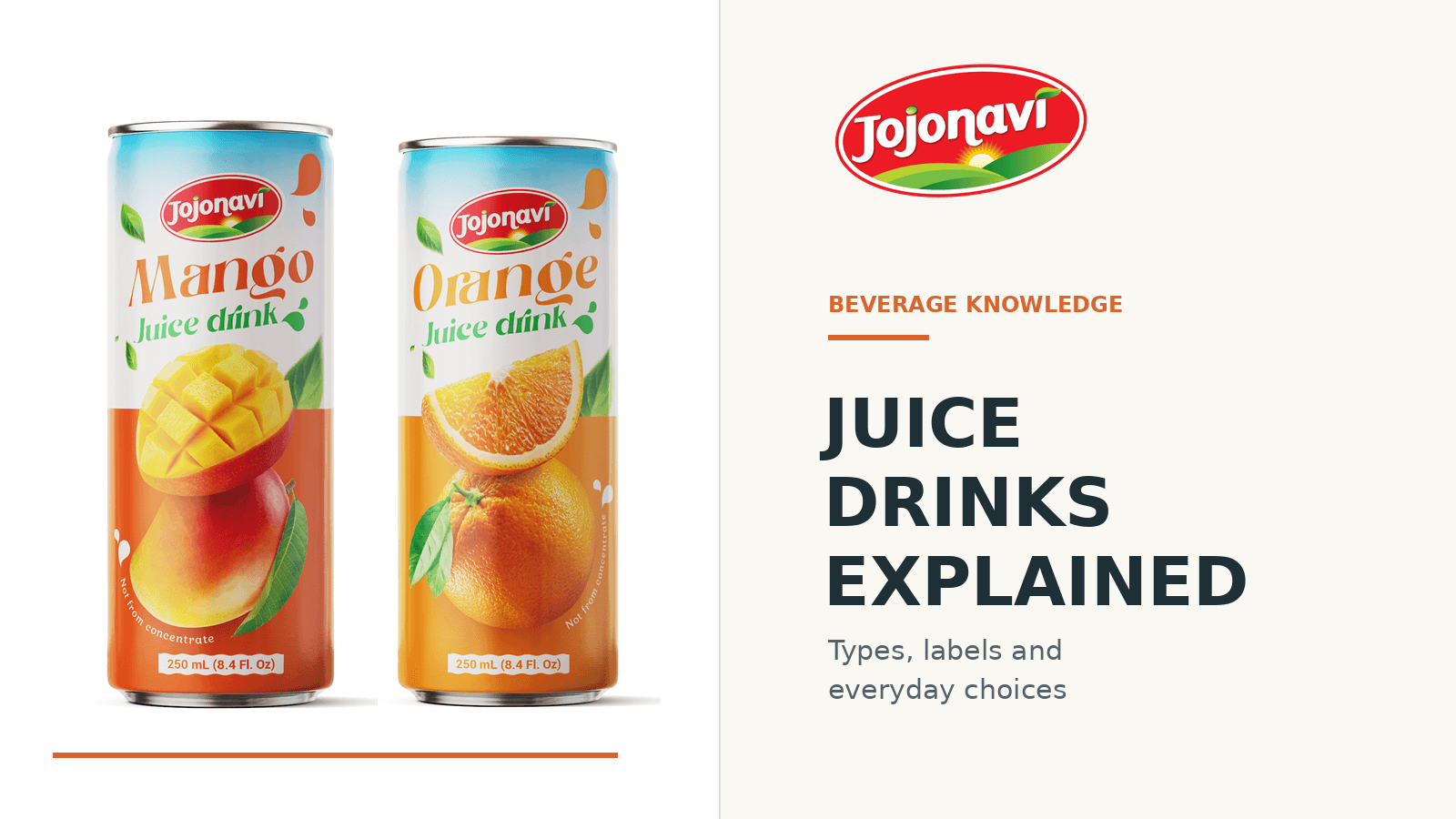
JOJONAVI's current beverage portfolio includes named juice-drink varieties such as Mango Juice Drink 250 mL and Orange Juice Drink 250 mL, alongside other fruit flavours and drink formats. These examples show how flavour and format help people navigate a collection. They do not establish the exact fruit-juice percentage, sweetness or nutrient content of any particular SKU without checking that product's approved label.
Explore the JOJONAVI beverage range for product names and formats. Retailers and distributors should request the current specification and market-specific product documentation before making purchasing, listing or promotional claims.
The takeaway
A juice drink is not simply another name for 100% fruit juice, and a fruit picture is not a shortcut to the ingredient list. Learn the broad categories, then compare actual packages using their names, juice declarations, ingredients, sugars and storage instructions. That approach works better than judging a beverage by colour or flavour alone—and it leaves room to enjoy the fruit-inspired drinks that match your preferences.
Frequently asked questions
What is a juice drink made of?
A juice drink generally contains some fruit juice together with other ingredients such as water and potentially sweeteners or flavourings. The exact ingredients and juice content depend on the product. Check the approved label.
Is a juice drink the same as 100% fruit juice?
No. A juice drink is not automatically 100% juice. In the United States, drinks with some but less than 100% juice must be qualified appropriately when the product name uses 'juice'. Rules differ across markets.
Does a fruit picture mean a drink contains fruit juice?
No. Fruit imagery and flavour names are not proof of a particular juice percentage. Read the product name, the juice declaration where required, and the ingredients.
Are fruit nectar and juice drink the same thing?
Not necessarily. Nectar has specific definitions in standards such as Codex CXS 247, while juice drink is a broader name in some markets. Compare the actual label and local rules.
How can I compare sugars in fruit beverages?
Read the serving size and total sugars. Where the label lists added sugars, compare that figure separately. Total sugars can include naturally occurring sugars even when no sugars have been added.